Monday, January 07, 2008

Who would bear the losses, eh?

Sprint Nextel Corp. is in a position to lose a $2 billion investment in a new phone characteristic, if a court blocks Qualcomm Inc. from making the required chips. Qualcomm executives have intimated the court that there will be huge losses due to it. Qualcomm rival, Broadcom Corp., has asked US District Judge James Selna in California to eternally bar its rival from making chips enclosed by three Broadcom technology patents after an 18 month phase out period. A board of judges found in May this year that Qualcomm invalidated the patents, including one associated to walkie-talkie technology that Sprint plans to imbibe in phones in the first quarter of 2008, known as the QChat.

For Complete IIPM Article, Click on IIPM Article

Source : IIPM Editorial, 2007

An IIPM and Professor Arindam Chaudhuri (Renowned Management Guru and Economist) Initiative

Thursday, December 13, 2007

Pre- Clinton methodology

To top it all, consider 2.6%, 2.0%, 2.5%, 0.6% & 1.9% – a string of five quarters of below 3% growth, which has only happened 12 other times in the past 60 years. One can go on and on with statistics. But, the figures would appear to be even more disappointing considering the fact that all official indicators by the Federal Reserve, like employment, inflation et al run counter to the day to day experience of a common man! Take inflation for that matter, John Williams, an economist & specialist in government economic reporting calculates the Consumer Price Index (CPI) based on the pre- Clinton methodology and according to the methodology of the 1980s (no hedonic adjustments for quality improvements in manufactured goods & different weighting of the CPI basket of goods & services). According to him, adjusted to pre-Clinton Era methodologies, annual inflation was about 6.2%, in March and reset to the methodology of 1980, the SGS Alternate Consumer Inflation Measure rose to 10.2% in March (see chart to your right). US is perhaps already in recession, sans an honest admission by the Fed. But one must give them due credit for putting up a brave face, backed by a barrage of ‘cooked up’ statistics

For Complete IIPM Article, Click on IIPM Article

Source : IIPM Editorial, 2007

An IIPM and Professor Arindam Chaudhuri (Renowned Management Guru and Economist) Initiative

Wednesday, December 12, 2007

Anil appears most vulnerable

It is in the power sector that Anil appears most vulnerable. There is the uncertainty hovering over this sector because of the inability or unwillingness of state governments to reform and revamp the state electricity boards. Without this revamp, power generation remains a financially risky proposition because bankrupt boards simply do not have the cash to pay for the power that they purchase. But a bigger strategic threat, as mentioned earlier, is gas. When the brothers split, it was agreed that Mukesh-controlled Reliance will sell Godavari gas to Anil-controlled RNRL at $2.8 per mmbtu. The Ministry of Oil & Gas has put a spanner in the works (Anil camp loyalists say it was done at the prompting of the Mukesh lobby) by ruling that the price is too low.

For Complete IIPM Article, Click on IIPM Article

Source : IIPM Editorial, 2007

An IIPM and Professor Arindam Chaudhuri (Renowned Management Guru and Economist) Initiative

Wednesday, December 05, 2007

Astounding patriotic commitment

But what kept Kihachiro and his team slogging on with an astounding patriotic commitment was the fact that Honda had drilled into this team that it was purely their vision, and not any other senior’s vision, that was going to determine how Honda fared in the US. In other words, the organisation was committed to zero vision at the top, but at the same time, passionately nurturing magnanimous vision at the level just below. The trust that the corporation placed in Kihachiro resulted in Honda capturing a mind boggling 50% of US market within ten years of entering its shores.

For Complete IIPM Article, Click on IIPM Article

Source : IIPM Editorial, 2007

An IIPM and Professor Arindam Chaudhuri (Renowned Management Guru and Economist) Initiative

Wednesday, November 28, 2007

'Colours'

Besides bottom-line bliss, even KNP’s top line has been showing remarkable numbers. Revenues have appreciated consistently with the growth being an outstanding 16% over the past half-adecade, and reached a gigantic Rs.14.84 billion. The company has also emerged the market leader in industrial, automotive & powder coatings in India. All this makes the picture appear perfect for the paints major. Moreover, the industry is growing aggressively at 15% annually and valued at a scintillating Rs.95 billion today. But while KNP basks in this new found glory, there still happens to be much unfinished work before it basks in the bright ‘colours’ of accomplishments. Where does KNP fall short?

For Complete IIPM Article, Click

Source : IIPM Editorial, 2007

An IIPM and Professor Arindam Chaudhuri (Renowned Management Guru and Economist) Initiative

Tuesday, November 27, 2007

Really...Why at all

Indiabulls?
Oh come on! Don’t tell us that the first day you had heard about this corporation, you decided to put all your money’s worth into buying its stock?!? Of all the names you could have chosen, we’re sure, neither you nor any foreign investor would’ve even given a first glance to a company named after the plural male counterpart of the holiest animal in the nation. Or was it because the name was also used oft en to refer to the kings of stock exchanges, the bulls? Uhh, perhaps. Well, that’s what we thought when we first met the top executives of Indiabulls Financial Services at a full-day campus recruitment session at one of the leading business schools in India.

For Complete IIPM Article, Click on IIPM Article

Source : IIPM Editorial, 2007

An IIPM and Professor Arindam Chaudhuri (Renowned Management Guru and Economist) Initiative

Monday, November 26, 2007

Naxalism

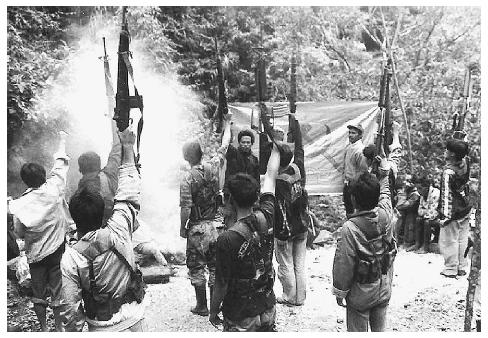
One wonders how easily these critics iipmforgot about the billions our successive governments have had, and never invested on sincerely developing the situation of the underprivileged... Nevertheless, Naxalism today is nothing but an organised extortion racket at best, and a bloody terrorist organisation bereft of ideology at worst, oft en using the disguise of intellectualism to hide their real motive. So who takes the blame for this movement? Surprisingly, more than Naxalites themselves, the blame squarely lies on successive governments, who have never been able to provide productive employment, literacy, income, health services and a dignified existence to hundreds of millions of Indians. Think about it, after 60 years of so called ‘Independence’, India has 400 million poor. Naxalites have 400 million prospective members to recruit...

For Complete IIPM Article, Click on IIPM Article

Source : IIPM Editorial, 2007

An IIPM and Professor Arindam Chaudhuri (Renowned Management Guru and Economist) Initiative
Read More IIPM-Article:-

A tough Endeavour
Alarm bells
ICICI hai na!
Taking Taj to places...
Delhi to sip Starbucks first
A Fair and Handsome deal
Blackstone buys out Intelenet
Calling off the ‘Spice’y Idea!
HLL ‘Lever’ ages the power of Hindustan

Friday, November 23, 2007

DEFENSE: AIRFORCE

BARE FORCE?
...force a question mark

Technically the fourth largest air force in the world, the Indian Air Force probably never had it so bad. Especially at a time when the nation’s increasing geopolitical and economic importance is expanding the strategic paradigm of the country’s air force. The same schizophrenic indecisiveness, which has so far delayed the modernisation of Indian Army, has literally crippled the air force. While its dwindling fleet of ageing MiGs is forcing it to reduce the number of squadrons much below the sanctioned level, the indigenous production of Sukhois have not been able to keep pace with the desired level. While the government has been unable to bring out the tender of the much needed 126 MRCAs, the ageing SAMs are adding to the woes. This, at a time when China and Pakistan have been vociferously investing in their air forces. While we self defeatingly dither on crucial purchases, India’s government goes one step ahead and continues investing in the ostensible research capabilities of ISRO and similar inefficient domestic organisations, which have been able to deliver zilch!

For Complete IIPM Article, Click on IIPM Article

Wednesday, November 21, 2007

Vysya gets Ponting for ‘Zero’

ING Vysya, one of the country’s leading private sector banks recently launched its Freedom savings account, a product targeted at the middle income group. The account is available for all customers and promises freedom from the hassle of minimum balances of normal savings bank accounts. What made the whole deal a special affair was the presence of Australian Captain Ricky Ponting who was brought in to launch the card. Despite the fact that in India about 15% of such zero balance accounts go dormant within the first year of opening, ING Vysya hopes that on average, customers will maintain a balance of anywhere between Rs. 8,000 to Rs.10,000.

For Complete IIPM Article, Click on IIPM Article

Source : IIPM Editorial, 2007

An IIPM and Professor Arindam Chaudhuri (Renowned Management Guru and Economist) Initiative

Tuesday, November 20, 2007

Calling off the ‘Spice’y Idea!

The merger deal between Idea Cellular and Spice Telecom that could have paved the way for consolidation in the telecom sector has been called off due to disparities in price. Idea, present in 11 circles out of country’s 23, was eager to expand its footprints in terms of its subscriber base, but retraced its steps because of the price being demanded by Spice Telecom. It’s learnt that Spice was citing roughly twice the value of the company, which was deemed unrealistic by Idea. According to officials there is no question of reviving the talks even after the Spice IPO hits the market.

For Complete IIPM Article, Click on IIPM Article

Source : IIPM Editorial, 2007

An IIPM and Professor Arindam Chaudhuri (Renowned Management Guru and Economist) Initiative

Monday, November 19, 2007

WPP’s advance booking syndrome...

GroupM, the media buying agency of WPP Group is buying advertising time valued at around $1 billion from NBC Universal’s television as well as digital properties. It involves both day time and prime time programming. Bravo (the cable property of NBC), Spanish language programming and Internet sites are also covered by the agreement. Last year there had been confusion on the structure of the deals as previously the deals for the commercial time were based on the number of viewers. Since the introduction of DVRs, broadcasters as well as advertisers had to rethink. Nielson Media thus introduced live plus three, a rating method that tracks viewers watching commercials both live and on DVR. Supposedly, the NBC– Group M deal is based on this particular rating method.

For Complete IIPM Article, Click on IIPM Article

Source : IIPM Editorial, 2007

An IIPM and Professor Arindam Chaudhuri (Renowned Management Guru and Economist) Initiative


Friday, November 16, 2007

Bribe the officials

They bribe the officials and so it must be shut down...” Someone from amongst them further added, “Bagawali (a nearby river) has dried up. The water that we used to get at 70-feet below ground level is now difficult to get even at 100-feet today.” We were taken aback at the disclosure for sure! The owner of a medical hall also commented, “Water table is declining every year by 15-20 feet”. We were stunned – how could just one plant be the cause of drying up of a river? Nevertheless, such comments were but expected. The comments also aroused a sense of anxiety among us and once again we sought to investigate further.

For Complete IIPM Article, Click on IIPM Article

Source : IIPM Editorial, 2007

An IIPM and Professor Arindam Chaudhuri (Renowned Management Guru and Economist) Initiative

Thursday, November 15, 2007

The river that dyes

Tirupur, the textile hub of southern India, has crossed Rs.110 billion in earnings from textile exports, according to Tirupur Exporters Association (TEA). But there’s a price for this too! And in this case, the price is something too much to bear. Here it is – the death of river Noyyal, a tributary of the Cauvery. The city which is located upstream, had used water from Noyyal for years for its dyeing industries. It is a known fact that bleaching and dyeing processes are water consuming and highly polluting. It has been calculated that Tirupur has more than 700 dyeing units. All the effluents with salinity and heavy metals from these units find its way into the river Noyyal, shockingly untreated! The water with effluents gets stagnated in a irrigation dam downstream at a place called Orathapalayam.

For Complete IIPM Article, Click on IIPM Article

Source : IIPM Editorial, 2007

An IIPM and Professor Arindam Chaudhuri (Renowned Management Guru and Economist) Initiative

Wednesday, November 14, 2007

The Last Lear to the rescue!

Big B has been talking about global warming, the Bigissue that has been creating ‘waves’ all around the world. When addressing the press a few days prior to the International Indian Film Academy Festival (IIFA), the acting maestro commended the academy’s efforts to propagate climate change issues, apart from offering the usual platter of glitz and glamour. He urged his fans (that includes most of India and the world) and the media to join hands in tackling this grave problem. And you know when the Shahenshah says something, it’s final!

For Complete IIPM Article, Click on IIPM Article

Source : IIPM Editorial, 2007

An IIPM and Professor Arindam Chaudhuri (Renowned Management Guru and Economist) Initiative

Tuesday, November 13, 2007

Band Aid for Mother Earth

Musicians warm up to the cause of global warming
Till now we associated SOS with the distress signal of the International Morse Code that stood for Save Our Souls – an alarm that ships and aircraft s have oft en found to be their saviour and, has oft en been seen adding just the touch of drama to flicks or even to one of those thriller novels. But those three dots, three dashes and the final three dots might become better known to the future generations as the sign for Save Our Selves, a unique interpretation of the distress signal for a crisis unparalleled. Already the wheels of a mammoth movement have begun to turn and soon the young and the old, from Sydney to the United States are going to unite to take their first step towards saving their Mother Earth.

For Complete IIPM Article, Click on IIPM Article

Source : IIPM Editorial, 2007

An IIPM and Professor Arindam Chaudhuri (Renowned Management Guru and Economist) Initiative

Wednesday, November 07, 2007

Numerous Actions with PETA

In what other ways can you spread the message?
Welliipm, as you know, I’ve done numerous actions with PETA to help get the word out. I traded in my red Baywatch swimsuit for a lettuce-leaf bikini for an ad promoting vegetarianism. I’ve narrated exposés of the leather trade in India and the meat industry in the US. Earlier this year, I spearheaded a petition drive against the annual seal hunt in Canada, where baby seals are still beaten bloody on the ice for their fur. I’ve fi red off letters, posed for posters, called on designers to create animal-friendly fashions, and even written an opinion piece for The Wall Street Journal, urging advertising executives to stop using unwilling animal actors to sell products. Everyone can do their part – whether it’s something as bold as attending a demonstration or as simple as making a vegetarian meal for a loved one. Every little bit helps – the important thing is to just do something.

For Complete IIPM Article, Click on IIPM Article

Source : IIPM Editorial, 2007

An
IIPM and Professor Arindam Chaudhuri (Renowned Management Guru and Economist) Initiative

Friday, November 02, 2007

BAPS Shri Swaminarayan Mandir, London

Imagine a complex that uses heat generated by a gathering of people to generate 20 KW of energy, uses energy-efficient lighting when natural light falls short and products that are made by CFC-free manufacturing methods. This wonderful product of human imagination, reminiscent more of a science park than anything else, is the BAPS Shri Swaminarayan Mandir in London, which planted 2,300 English Oak saplings in Devon to compensate for the 226 trees used in its construction! Advises Mr. Yogesh Patel, Head, Media Relations, of the temple, “Start with something, however small it may be, and then build on it. One constantly reads of India being a leading economy in the years to come and this is an opportunity for them to take a lead.” They even involved children during the construction, who collected over 5.5 million cans and 22 tonnes of aluminium foil for re-cycling!

For Complete IIPM Article, Click on IIPM Article

Source : IIPM Editorial, 2007

An IIPM and Professor Arindam Chaudhuri (Renowned Management Guru and Economist) Initiative

Thursday, November 01, 2007

A flood of woes!

As predicted by meteorological departments all over the globe, the planet is sure to witness a climatic upset – with irregular and unpredictable precipitation patterns. A report published by the BMO in 1999 forecasted nine-fold increase in incidents of flood due to excessive precipitation, wherein 80% would occur in Asia and Southeast Asia alone, where it poses further threat because of lack of infrastructure such as dykes and warning systems.

For Complete IIPM Article, Click on IIPM Article

Source : IIPM Editorial, 2007

An IIPM and Professor Arindam Chaudhuri (Renowned Management Guru and Economist) Initiative

Wednesday, October 31, 2007

Pesticides: Repel the repellents

Praise the performance of the biologically active chemicals, pesticides in helping get rid of pests, and at once stick out the hazards and risks involved in their usage and exposure. Prolonged exposure to these compounds can cause anything from irritation in the skin and eyes to muscle twitching, dizziness, vomiting, headache, diarrhoea to disruption of the nervous system, depending upon the route of entry – dermal, oral, or by inhalation of the chemical. An obnoxious stand by most viewpoints, at this juncture of the 21st century, would be to advocate a complete ban on the use of pesticides. But instead, more rational fixes are the need of the hour.

For Complete IIPM Article, Click on IIPM Article

Source : IIPM Editorial, 2007

An IIPM and Professor Arindam Chaudhuri (Renowned Management Guru and Economist) Initiative
Read More IIPM Articles:-
Microsoft makes a Quantitative move!
9/24/2007
In one of its biggest acquisition ever, Microsoft has acquired a Quantive, the online marketing biggie at a whopping price…

KINETIC MOTORS
9/3/2007
Kinetic gatecrashes into the party! Though having failed to make a mark in our survey last year, Kinetic Motors makes…

VIDEOCON
8/31/2007
Everyone talks about its umpteen foreign acquisitions, but listen to its India strategy too – it’s incredible! When you talk…

GOOGLE
8/21/2007
Brand Google is soaring globally, but its India strategy clearly needs more punch Every one loves the $144.6 billion giant…

HYUNDAI MOTORS
8/20/2007
Once upon a time, Maruti was the only rival for the sunshine car. Till Tata Motors came along... Here’s a…

Friday, October 26, 2007

Indian farmers

Fortunately, the government has taken a whisper of a logical step in this year’s budget by announcing a comprehensive insurance scheme, the compensation of which will be based on weather derivatives, rather than on making tedious calculations of crop damage. But aren’t derivatives extremely miniscule currently? M. Parshad, CMD of Agricultural Insurance Company, which has been asked to carry out the scheme on a pilot basis in few states, accepted to B&E, “At the moment, weather derivatives take up only a very small fraction of the rural insurance market, but since weather derivative contracts are easier and much faster to settle, we expect it to change.” Whatever it is, it’s a great start. But the government should now focus on making such schemes compulsorily linked to all crop loans and to attach maximum number of farmers, and even other firms whose fortunes depend on weather, to it. Really, why can’t the thumb rule for Indian farmers one day change from ‘No Rain, No Gain’ to ‘No Rain, No Pain’

For Complete IIPM Article, Click on IIPM Article

Thursday, October 25, 2007

Mankind’s future under water!

It’s time to recite Coleridge “Water water everywhere, not a drop to drink….” And surely if the trend of global warming & melting of glaciers continue, ocean levels will rise and swallow up entire nations & cultures. Besides other threats of global warming, the one attracting high concern is thermal expansion of the oceans – a result of water molecules expanding in warmer temperatures, increased precipitation and melting of mountain glaciers which leads to high sea-levels. The sea-levels have been rising tremendously with a rise of over 200 meters since the end of the last ice age, and astonishingly in 20th century alone, sea levels rose 0.17 meters with predictions for the next century rise ranging from 0.18 to 0.59 metres. The brunt will be borne by low lying areas, which would be entirely submerged such as Nile Delta, Maldives and Bangladesh which will suffer great damage if and when sea level rises, as it has an extensive coastline and lies between 2 major rivers. Shrinking coastlines are being observed across the world.

For Complete IIPM Article, Click on IIPM Article

Wednesday, October 24, 2007

Protocol wrongly exempted

But the same America rejected him in favour of George Bush, coincidentally (or perhaps, not so coincidentally), his chief target. Unfortunately, it’s indeed a shame that the US, which is the largest contributor to carbon emissions, has refused to take the lead in retrieving the world. Statistics clearly show how the US alone contributes to over 30% of the world’s greenhouse gases, yet Bush very conveniently backed out on his election pledge to cut down on CO2 emissions. The US asserted that capping carbon emissions is akin to slowing down economic development. Bush also reversed a ruling for mandatory reductions in CO2 emissions in electric power plants in the US. But interestingly, he refused to ratify US support to the Kyoto Protocol (Australia supported the US on this) stating that this Protocol wrongly exempted developing nations (like India & China).

For Complete IIPM Article, Click on IIPM Article

Tuesday, October 23, 2007

Ethanol

Taking the case of ethanol; its production depends on molasses obtained from sugar cane (a primary cash crop in the country). Large industries engaged in sugar production such as Balrampur Chinni, Bajaj Hindusthan& Dhampur Sugar have been busy romping up their production capacities for molasses derivation. However, the ‘ethanol’ comfort factor ends there, and you can blame the myopic government policies for the same. A spokesperson of a large western UP-based company (who requested for anonymity) flatly put it across to B&E, “We do not want to increase the production share of molasses as we hardly save anything on that at the present rates, A quintal of sugarcane yields Rs.18 for each kg of sugar, but it only gives Rs.2 for each kg of molasses obtained!” The considerable gap is demotivating for producers even though molasses is a multi-purpose ingredient in a lot of production activity.

For Complete
IIPM Article, Click on IIPM Article

Source : IIPM Editorial, 2007

An
IIPM and Professor Arindam Chaudhuri (Renowned Management Guru and Economist) Initiative

Monday, October 22, 2007

Diesel gets a green push

For the project pertaining to jatropha plantations, the government has made provisions of 98 million acres of arid land. Unlike other cash crops the leaves of the jatropha plants are unfit for animal consumption; therefore the yield is safe from animal grazing. Dr. Reena Singh (Area convenor & associate fellow), Centre of Mycorrhiza, TERI “As per our research, the Jatropha plantation requires atleast one irrigation annually and bio-fertilizers like Mycorrhiza. The plantation should be sustainable however” The process of oil extraction is based on jatropha seed crushing in an oil expeller rendering oil. This oil in turn is then mixed with alcohol along with a catalyst with bio-diesel and glycerine as bi-products. Extracted bio-diesel can be mixed with normal diesel bringing about oil conservation and better combustibility which results in lower emission levels. Scientists believe that bio-diesels have sustainable Cetane (equivalent of Octane) levels and thus they can be used up to 30% under normal operating conditions without evident engine damage. Furthermore, being a ‘low care’ crop, jatropha requires very little maintenance. Once the plantation is secured, it is sustainable even without the usual hoopla of proper irrigation and fertile soil. It’s not without a reason that jatropha is known as the ‘shameless plant’! Companies like DaimlerChrysler, D1 Oils & IOCL are taking active interest in this new age technology. As a matter of policy though, the government is reportedly not very keen on large scale jatropha plantations as that may lead to a cash crop status for jatropha. Critics are with the view that in an event of increased dependence on the crop as a fuel alternative, farmers could be encouraged to produce less food crops.

For Complete IIPM Article, Click on IIPM Article

Source : IIPM Editorial, 2007

An IIPM and Professor Arindam Chaudhuri (Renowned Management Guru and Economist) Initiative


Wednesday, October 17, 2007

Potential antagonists

Yet, such hard won success once again iipmseems to be threatened by a creeping tendency to be ‘soft ’ with negotiators and potential antagonists. There is the nuclear deal with the United States, where Uncle Sam is steadily moving the goalposts and trying to stifle and choke India’s strategic ambitions. There is Australia that claims that it will not supply Uranium to India even if there is a nuclear deal with Uncle Sam, because India violates international nuclear weapons control regimes. There is Pakistan that continues to mollycoddle terrorists while claiming that terror camps have been shut down. Most signifycantly, there is China which brazenly announces that Arunanchal Pradesh is an integral part of the Middle Kingdom, and hence refuses to give visas to people from the state.

For Complete IIPM Article, Click on IIPM Article

Source : IIPM Editorial, 2007

An IIPM and Professor Arindam Chaudhuri (Renowned Management Guru and Economist